My Mom, my advocate
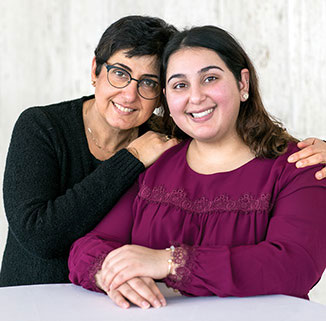
Mitra Ghandeharizadeh is a 23-year-old school counselor in Annapolis, Maryland and proud graduate of Johns Hopkins University with a master’s degree in school counseling. Counseling grade-school students is rewarding but demanding.
The passion that Mitra brings to her work makes it nearly impossible for her students to know that most days she is crippled by overwhelming fatigue and symptoms that, at times, seem unmanageable. She often finds herself asking a question that has yet to be answered: “What is happening within my body?”
For the past two years, Mitra herself has had quite an experience beyond school walls. In March 2016, she says, “I became really sick.” She experienced headaches so blinding she couldn’t open her eyes. Her kidneys hurt. Doctors said she had a pelvic infection and put her on antibiotics. The pain didn’t go away.
Mitra was sent to a rheumatologist whose tests indicated Sjögren’s syndrome, an autoimmune disease that targets moisture-producing glands of the body, resulting in dry mouth, dry eyes, and chronic cough. After further testing, Mitra was also diagnosed with lupus, an autoimmune disease that affects tissues such as the skin, joints, and organs.
“I had a rash all over my face, my neck, and it was a typical lupus butterfly rash,” Mitra says. “I also had lots of pains in my sides and kidneys.”
Mitra went from being a full-time grad student to a patient. As luck would have it, Johns Hopkins has one of the premiere research centers for rheumatology, the Jerome L. Green Sjögren’s Syndrome Center.
Johns Hopkins wasn’t the only connection Mitra had to her illness. Mitra’s mother, Faranak Nikfar, has worked for Bristol-Myers Squibb for more than 25 years and has spent much of that time working on discovering and developing investigational treatments for rheumatoid arthritis, Sjögren’s syndrome, and lupus.
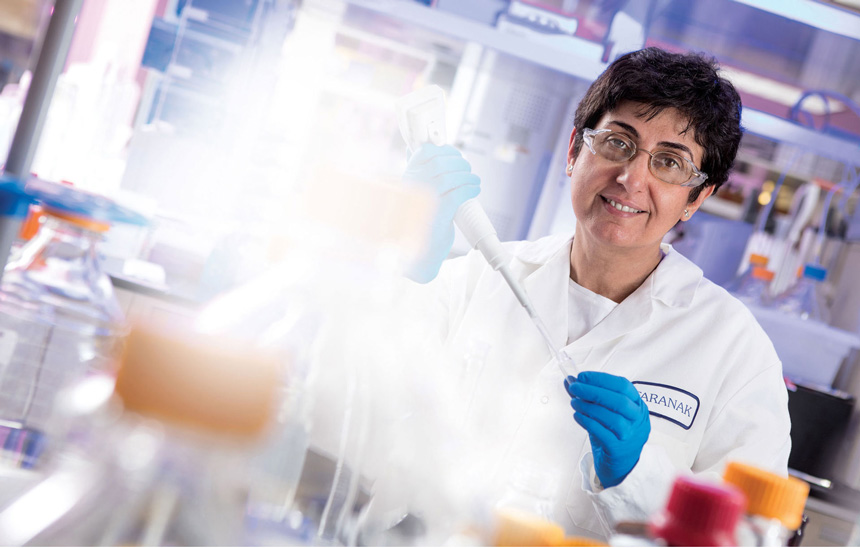
“Every day I come to work and I’m working for my daughter,” says Faranak. “It gives me a renewed sense of purpose. It gives my fellow researchers a sense of purpose.”
Mitra spent much of her childhood growing up around the company, visiting the office and getting to know her mom’s colleagues.
“I grew up a little Bristol-Myers Squibb baby,” says Mitra. “I’m not just my mom’s kid, I’m her team’s kid.”
Though there are limited options to treat Mitra’s disease, she’s thankful for the work that her mom and Bristol-Myers Squibb are doing for patients.
“My mom is my biggest advocate,” Mitra says. “The investment in me, from both her and Bristol-Myers Squibb, goes far beyond anything I could ever have imagined.”
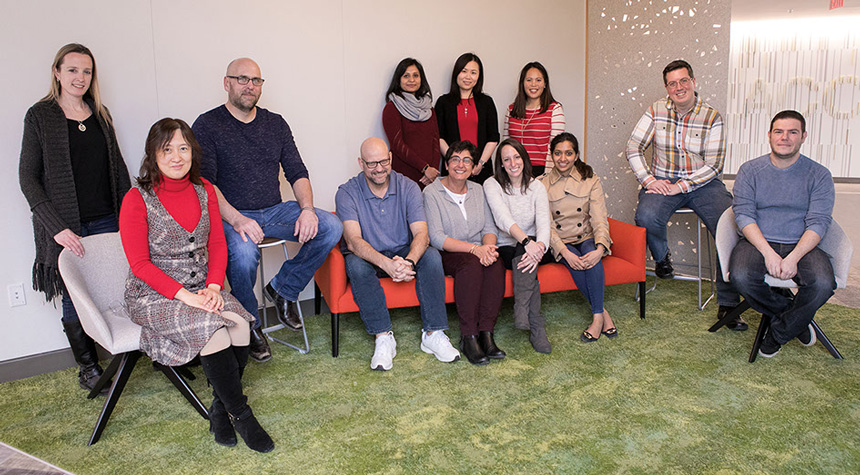
Bristol-Myers Squibb research fellow–and mother of Mitra Ghandeharizadeh–Faranak Nikfar, Ph.D. (second from left on sofa) with some other members of the team working on treatments for autoimmune disorders like Mitra’s.